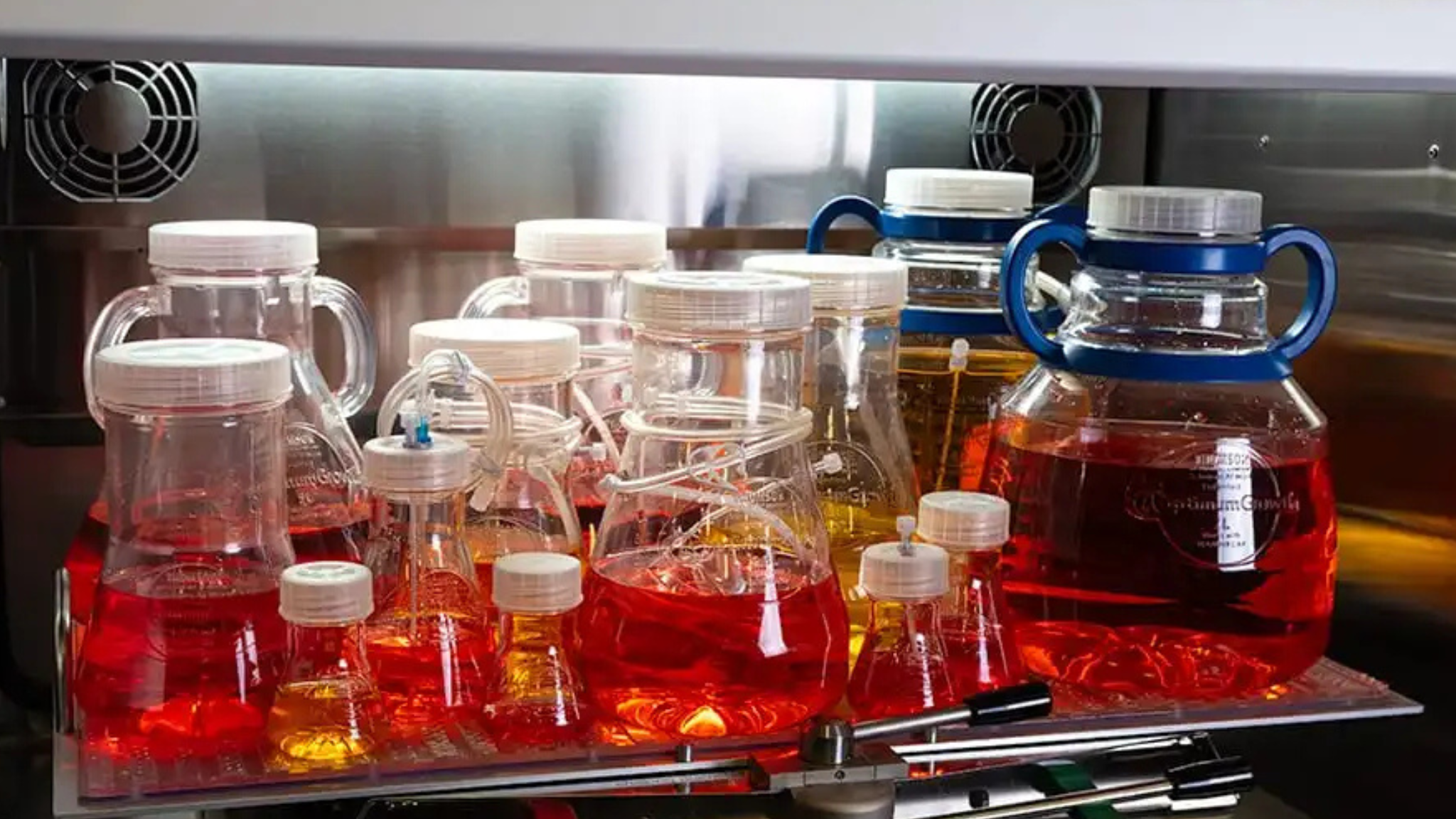
Bridging the Mid-Scale Gap in Bioprocessing

Scaling a bioprocess from benchtop experiments to production-scale bioreactors is never a simple step. While small-scale tools are essential for early discovery and screening, they often fail to replicate the dynamics of larger vessels. This creates a “mid-scale gap,” where process development teams may lack the right model to generate predictive, reproducible data.
A recent application note from Thomson Instrument Company highlights how the Optimum Growth 6-Well Plate with integrated lid provides an effective solution for this challenge.
Key Findings from the Study
Each well of the Optimum Growth plate supports working volumes of 20–50 mL, offering researchers a meaningful intermediate step between shake flasks and bioreactors. The integrated lid reduces evaporation and contamination risk while still maintaining efficient gas exchange.
In tests with mammalian and insect cells, the platform delivered consistent protein yields and antibody titres across different fill volumes, giving teams confidence in reproducibility. Compared with traditional 50 mL conical tubes, the plate achieved equal or superior performance while also allowing higher throughput. Taken together, these results confirm that the 6-Well Plate provides a reliable and predictive scale-down model for process optimisation.
Why This Matters
The ability to bridge the mid-scale gap carries significant benefits. Consistency across different volumes gives researchers better data for decision-making and greater confidence that results will translate reliably into production. Reducing gradients in oxygen, nutrients and evaporation improves reproducibility across experiments. With six wells available in each plate, scientists can run parallel optimisation studies more efficiently, saving both time and resources. Most importantly, the use of predictive mid-scale models reduces the risk of unexpected outcomes when processes are scaled up to bioreactors.
Our Perspective
We work closely with biotech, biopharma, and cell & gene therapy teams, and we see firsthand how important it is to close the gap between scales. Tools like the Optimum Growth 6-Well Plate not only accelerate process development but also help reduce risk in one of the most resource-intensive phases of bringing therapies to market.
For teams facing the challenge of translating results from small vessels to large bioreactors, this study reinforces the value of adopting mid-scale, predictive platforms as part of a robust development strategy.
Read the application note below, or view it on the Thomson website.